
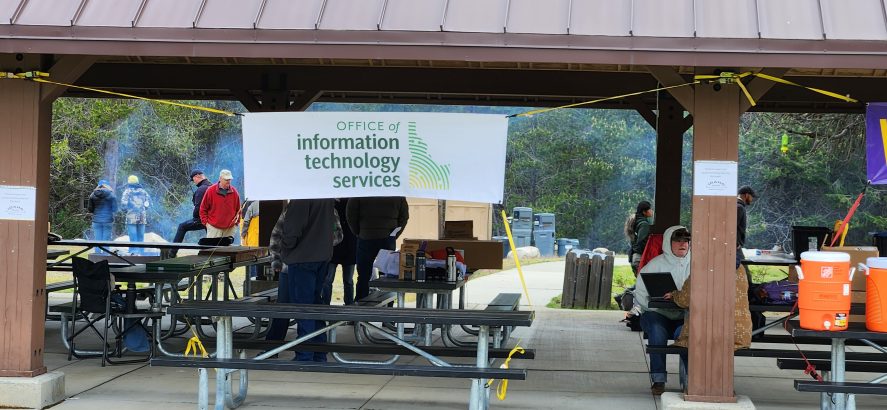
The 43rd Annual Idaho State Forestry Contest took place May 14th at Farragut State Park, bringing together more than 225 students between 5th and 12th grades, and nearly 150 volunteers for the yearly competition. For one day, the state park became a fully functional outdoor learning venue, supported by the Idaho Department of Lands, the Bonner County Soil & Conservation District, Idaho Fish and Game, Idaho Parks and Recreation, and ITS.
Competitors visited dozens of natural resource assessment stations including tree identification, log scaling, soil and water evaluation, compass and pacing, and timber cruising to test their forest management skills. The event continues to serve as a cornerstone for preparing Idaho students for careers in forestry and natural resources.
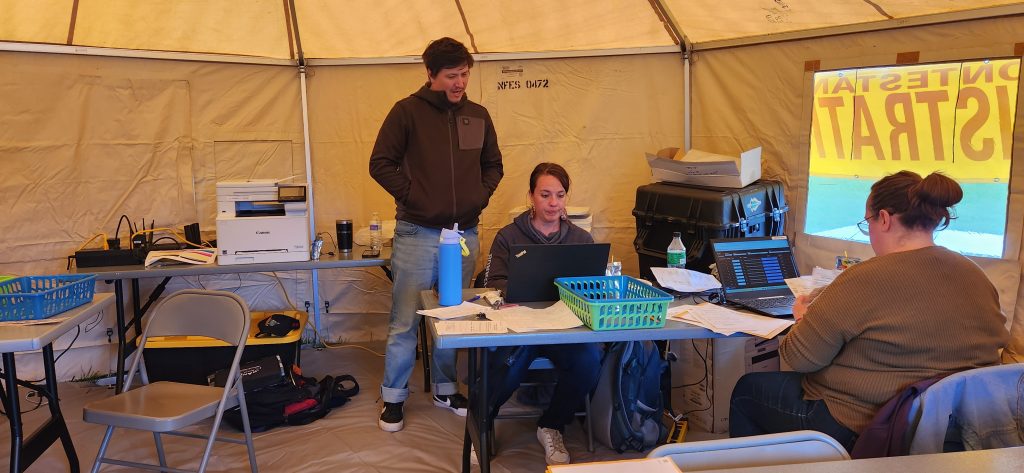
For ITS, the contest also represents a unique annual field deployment. When IDL was consolidated into ITS, responsibility for the contest’s application platform transitioned to AppDev. The event’s remote location and limited connectivity created new operational expectations, including the need to place a software engineer onsite to ensure stable system performance and enhanced customer support. Casey Kawamura stepped into this role, becoming the primary AppDev expert on the contest application. Casey supported the event onsite, ensuring steady scoring operations and uninterrupted coordination throughout the day.
This year also provided an opportunity for ITS to enhance technical support of the contest. By establishing reliable connectivity onsite, two additional AppDev engineers, Mark Davich and Jordan Casper, were able to participate remotely from the Chinden campus. Their involvement broadened operational knowledge, strengthened team readiness, and distributed support responsibilities beyond a single onsite engineer.
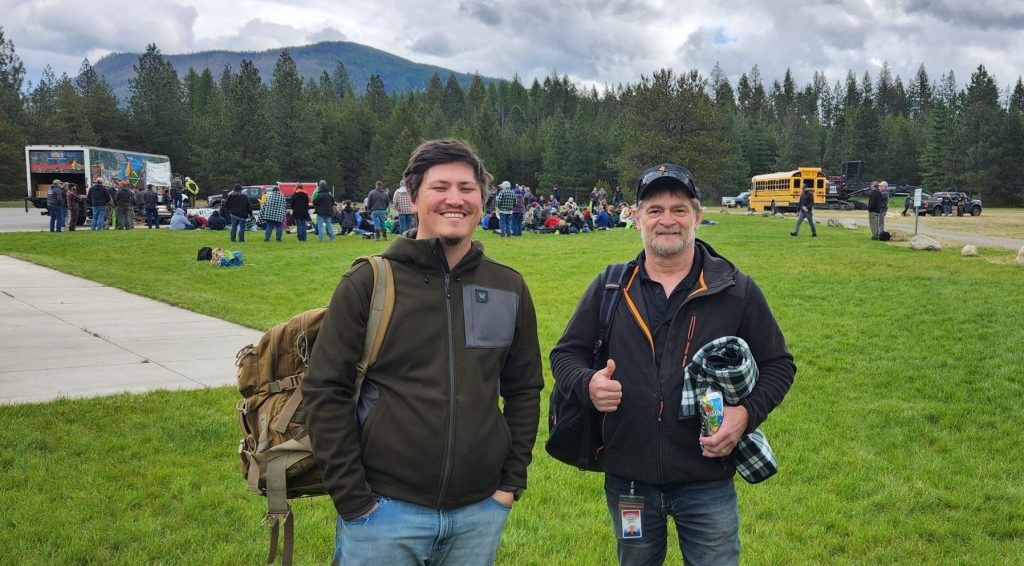
With this hybrid support model in place, remote staff could monitor live application activity, validate data integrity, and assist with troubleshooting as needed. This reduced onsite burden and measurably improved system resilience and provides the opportunity to optionally provide remote support for future events. Service Delivery Manager Tim Gates was instrumental coordinating the fire kit setup and assisting with this enhanced support model both prior to and during the event.
This year’s combined onsite and remote efforts demonstrated how AppDev and Infrastructure teams can deliver reliable, mission critical support even in off grid or field deployed environments. The hybrid model improves operational continuity and strengthens our overall capability to support real world field applications.
